
NVIDIA GTC 2026 Review: The Inference Era Goes Mainstream
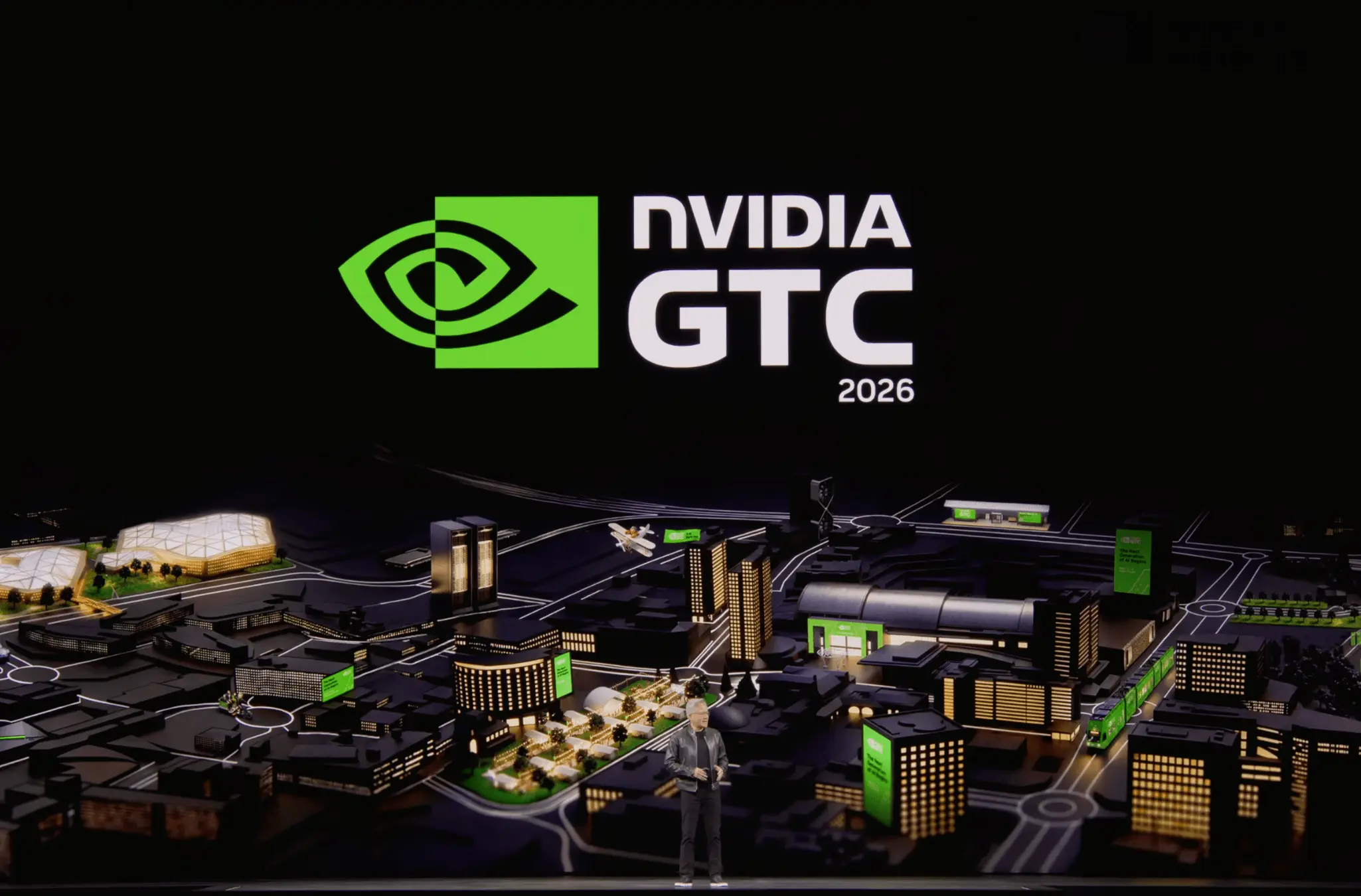
NVIDIA GTC 2026 was not simply another product keynote. It was a full-scale statement about where artificial intelligence infrastructure is heading next. From Vera Rubin and Groq-powered inference to agentic systems, AI factories, and a bold financial outlook, NVIDIA presented a confident vision of the next phase of the AI economy.
A Conference That Felt Bigger Than a Product Launch
NVIDIA GTC 2026 carried unusual weight even by NVIDIA standards. The company has spent years building its lead in accelerated computing, but this year’s conference felt different in tone and ambition. It was not framed as a narrow hardware event. It was presented as a roadmap for the next stage of artificial intelligence itself.
Jensen Huang’s keynote made that clear from the beginning. The message was not only that NVIDIA has more chips coming. The message was that AI has entered a new economic and technical phase, one where success depends less on isolated model training and more on scalable inference, full-stack system design, and the ability to turn raw data into usable intelligence.
That framing mattered. GTC 2026 did not feel like a company defending its current market position. It felt like a company trying to define the vocabulary of the next cycle. Terms such as inference, agentic AI, AI factories, structured data, and token economics were not side notes. They were the center of gravity.
The Biggest Theme Was the Pivot from Training to Inference
The clearest strategic signal from GTC 2026 was NVIDIA’s push to lead the inference era. For the past several years, NVIDIA has dominated the conversation around AI training infrastructure. That dominance remains important, but GTC showed that the company sees the next great revenue wave in running AI at scale rather than only training it.
This shift is logical. Training frontier models remains capital intensive and highly concentrated among a relatively small group of hyperscalers, frontier labs, and major platforms. Inference is different. It is where enterprises, software platforms, digital services, telecom providers, and application builders deploy intelligence continuously. It is where token generation becomes recurring business activity. It is where AI begins to function as live infrastructure rather than a research milestone.
NVIDIA’s positioning was energetic and disciplined. The keynote repeatedly tied token generation to revenue generation. That point may sound simple, but it is strategically important. If inference becomes the dominant share of AI workloads, then the companies that reduce cost per token, increase token throughput, and scale deployment efficiently will own the economics of the next phase.
That is what made GTC 2026 feel so consequential. NVIDIA was not merely saying that inference matters. It was saying that inference is becoming the commercial engine of the AI economy.
Vera Rubin Was the Centerpiece
The headline platform announcement was Vera Rubin, presented as the company’s next major architecture after Blackwell. Vera Rubin was positioned not just as a faster chip generation, but as a rack-scale and system-level answer to the computational demands of agentic AI, reasoning models, mixture-of-experts architectures, and large-scale inference.
What stood out most was the way Vera Rubin was described as an integrated platform rather than as a standalone processor launch. This distinction matters. NVIDIA is increasingly talking about entire factories of compute, memory, networking, storage, software, and orchestration. In this framing, the chip remains crucial, but it is no longer the whole story. The story is the coordinated system.
That systems orientation was one of the most powerful aspects of the keynote. It reinforced the view that AI infrastructure is becoming more architectural and less component-based. Buyers are not simply choosing a GPU. They are investing in an operational environment that affects performance, power efficiency, deployment flexibility, and future monetization potential.
Groq 3 LPU Added Real Energy to the Inference Story
Another major point of excitement was the integration of Groq 3 LPU technology into the Vera Rubin era narrative. That move sharpened NVIDIA’s inference ambitions. Rather than presenting inference as a side extension of its training hardware dominance, NVIDIA showed a more specialized and performance-oriented approach.
The promise here is compelling. If new system configurations can materially improve inference throughput per megawatt and reduce the cost of serving large models, then the business case for scaled deployment becomes much stronger. This is especially relevant as enterprises move from AI pilots to production systems and as cloud providers seek to maximize revenue per rack.
What made this dynamic was not just the performance language. It was the commercial framing around efficiency, capacity, and output. NVIDIA was effectively making the case that the future winners in AI will not only be those with the most advanced models, but those with the most efficient token factories.
That is a powerful concept. It connects semiconductor performance directly to software economics. It also helps explain why inference now feels like the most commercially urgent battleground in AI infrastructure.
The Financial Message Was Bold and Confident
GTC 2026 was also striking because of the scale of NVIDIA’s financial confidence. Jensen Huang raised expectations around cumulative demand for Blackwell and Vera Rubin through 2027 to at least $1 trillion. That is an extraordinary figure, but it was delivered not as theatrical exaggeration. It was presented as a direct consequence of how fast the world is moving into large-scale inference and agentic workloads.
Whether one views that figure conservatively or aggressively, its strategic purpose was obvious. NVIDIA wanted investors, enterprise buyers, partners, and the broader market to understand that it sees AI infrastructure demand as larger than previously thought. It also wanted to make clear that this demand will not be limited to frontier training clusters. It will extend into recurring operational AI use across industries.
This matters because the financial side of GTC 2026 was not detached from the technical side. The numbers supported the broader thesis. More inference means more tokens. More tokens mean more AI services, more enterprise applications, and more monetization pathways. That linkage between hardware deployment and recurring economic activity was one of the strongest through-lines of the conference.
NemoClaw and Agentic AI Gave the Event a Forward-Looking Edge
One of the more interesting dimensions of GTC 2026 was NVIDIA’s emphasis on agentic AI. The announcement around NemoClaw, described as an enterprise-ready path built on OpenClaw, added a new layer to the company’s message. NVIDIA was not only talking about model serving and data center throughput. It was also talking about how organizations will operationalize autonomous or semi-autonomous AI systems safely.
This is important because the market is gradually moving from simple assistants toward agents that can retrieve context, reason through steps, use tools, and execute work. That transition creates new technical and governance demands. Enterprises need privacy controls, sandboxing, secure deployment, and structured oversight. NemoClaw appeared designed to meet that need by taking the energy of open source agent frameworks and making them more enterprise compatible.
From a market perspective, this was a smart move. It allowed NVIDIA to participate not only in the infrastructure layer of AI, but also in the workflow and orchestration conversation. In other words, NVIDIA is not content to sell picks and shovels. It wants a role in shaping how the digital workforce itself is deployed.
The Real Story Was Full-Stack AI Factories
Perhaps the most important takeaway from GTC 2026 was that NVIDIA is now telling a full-stack AI factory story with more conviction than ever. The conference repeatedly highlighted how the future of AI depends on the interaction between GPUs, CPUs, networking, storage, software frameworks, simulation, and deployment models.
This idea of the AI factory has become central to NVIDIA’s identity. It is also strategically brilliant. Factories imply scale, throughput, design, repeatability, and industrial logic. The term elevates AI infrastructure from a cluster of expensive machines into a production system for intelligence.
That framing aligns well with where the market is heading. Enterprises want more than experiments. Hyperscalers want monetizable deployment efficiency. Telecom players want distributed inference opportunities at the edge. Governments and sovereign initiatives want national AI capability. All of these audiences can understand the logic of an AI factory.
By making the factory metaphor more concrete, NVIDIA is building a language that helps customers think beyond one-off hardware procurement and toward long-term infrastructure strategy.
Structured Data and Ground Truth Were Underrated but Important Themes
Another compelling aspect of the keynote narrative was the push to transform vast volumes of unstructured data into structured and actionable knowledge. This may not have been the flashiest part of the event, but it may prove to be one of the most durable themes.
For all the excitement around models, one of the most persistent problems in enterprise AI is that valuable business knowledge is scattered across documents, video, logs, support histories, messages, and operational systems. If those information sources remain fragmented, then even very powerful models struggle to produce reliable outcomes in production settings.
NVIDIA’s framing suggested that the next major opportunity lies in turning that raw informational sprawl into usable ground truth for AI systems. This is a major enterprise message. It points toward a future in which accelerated computing is used not only to run models faster, but to restructure the data foundation beneath them.
That idea deserves attention because it connects AI infrastructure directly to enterprise knowledge architecture. It also reinforces why GTC 2026 felt broader than a chip conference. It was really a conference about the machinery required to industrialize intelligence.
Why the Event Landed So Well
What made GTC 2026 especially effective was the coherence of the story. The hardware announcements were significant. The inference positioning was timely. The financial ambition was bold. The software and agentic layers added modern relevance. But the bigger reason the event worked is that all of those parts supported one central thesis.
NVIDIA wants the market to believe that artificial intelligence is no longer just about training giant models. It is about operating intelligence as infrastructure. That means serving models efficiently, turning data into knowledge, deploying agents responsibly, and designing systems that generate recurring value at scale.
That is a far more mature and compelling message than simple benchmark competition. It is also a message that resonates with where enterprise buyers are today. They want performance, but they also want economics. They want innovation, but they also want deployment paths. They want ambition, but they also want operational realism.
GTC 2026 delivered that mix unusually well.
Final Take
NVIDIA GTC 2026 was comprehensive, ambitious, and unusually well timed. It captured a market transition that is already underway and gave it a sharper vocabulary. The event showed that inference is becoming the new center of gravity, that AI factories are becoming a serious infrastructure model, and that agentic systems are moving closer to enterprise reality.
For technology leaders, investors, and enterprise builders, the keynote offered something more valuable than a simple product update. It offered a clearer map of where the AI economy may be heading next. NVIDIA is betting that the future belongs to those who can generate intelligence continuously, efficiently, and at industrial scale.
After GTC 2026, that bet looks more credible than ever.