
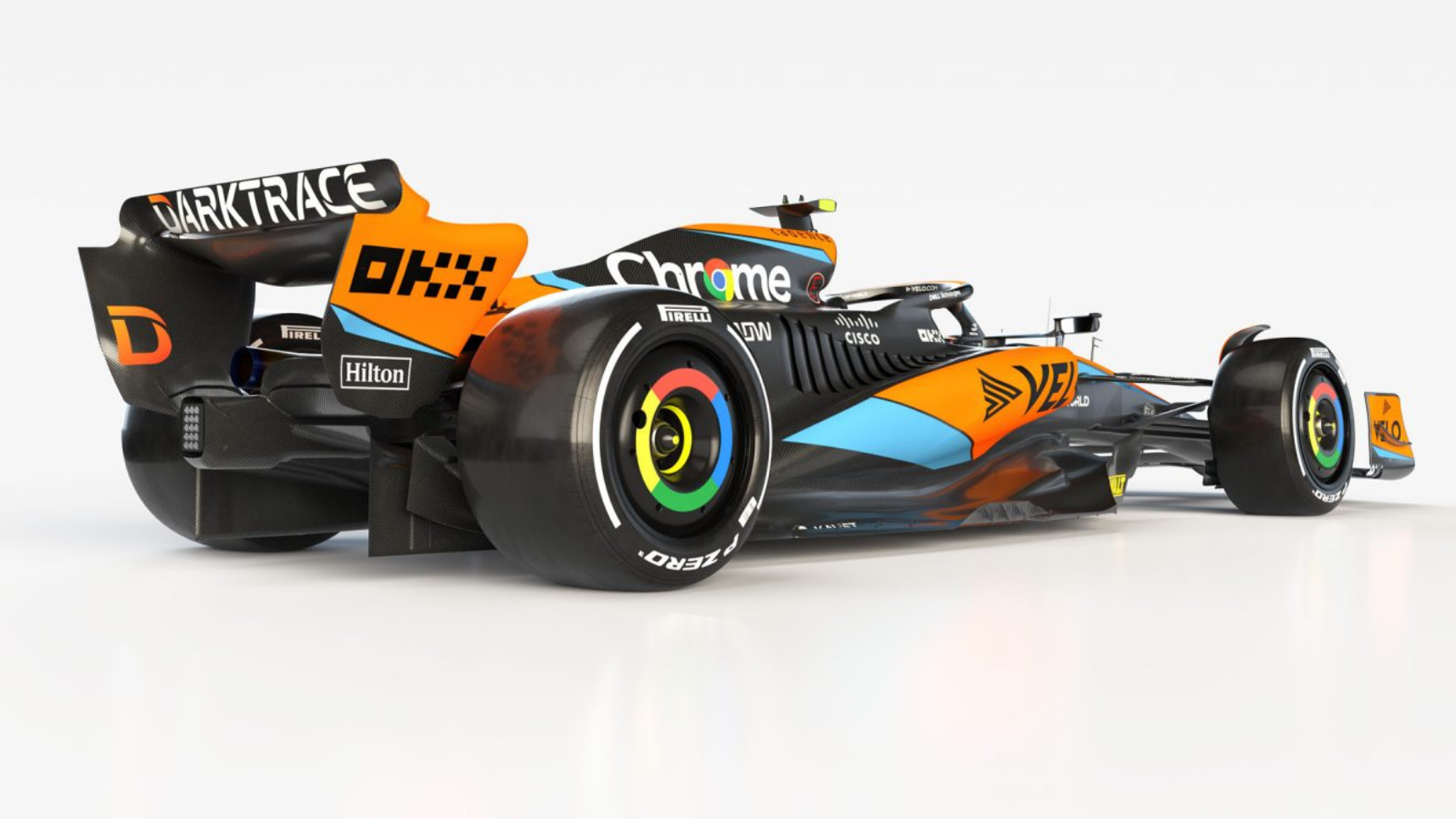
How AI Drives Performance: Lessons from Formula 1 Innovation
Formula 1 is becoming the ultimate proving ground for artificial intelligence. Teams like McLaren and Red Bull now rely on AI-driven simulation, predictive analytics, and digital twins to optimize performance, strategy, and safety. The race toward intelligent speed is redefining not only motorsport, but the future of data-driven industries worldwide.
The Fastest Laboratory on Earth
Formula 1 has always been a sport defined by milliseconds and margins. But as reported by CNBC and McLaren in late 2024, the world’s fastest teams are increasingly relying on artificial intelligence to unlock those margins. What was once the realm of aerodynamic engineering and driver instinct has become a living example of human–AI collaboration—one where every race is both a competition and a data experiment.
From pit-lane strategy to predictive component failure, AI is not replacing human expertise; it’s extending it. McLaren’s partnership with Dell Technologies, detailed on the team’s official website, describes how high-performance computing (HPC) systems now process petabytes of sensor data in real time. The objective: make cars faster, safer, and smarter—without crossing the razor-thin boundary between innovation and regulation.
Data: The New Fuel of Formula 1
In modern racing, the fastest car is rarely just the one with the most horsepower—it’s the one with the most actionable data. Each Formula 1 car carries more than 300 sensors capturing thousands of parameters per second: tire pressure, brake temperature, fuel efficiency, airflow, and driver biometrics. That data travels through ultra-low-latency networks to trackside engineers and to cloud-based analytics centers in the United Kingdom, Switzerland, and Italy.
As CNBC reports, AI tools transform this torrent of raw data into real-time strategy. Machine-learning models simulate track conditions, weather shifts, and traffic congestion to forecast optimal pit windows or overtaking opportunities. Engineers are no longer just mechanics—they are data scientists armed with neural networks and predictive dashboards.
McLaren describes this as “turning complexity into clarity.” During a typical race weekend, Dell Technologies’ HPC clusters can simulate up to 300,000 potential race scenarios. These models allow strategists to adjust in milliseconds, identifying undercuts, tire degradation curves, and fuel-saving patterns that human intuition alone could never perceive. Every lap becomes a feedback loop where AI refines human judgment, not replaces it.
Digital Twins: Engineering the Unseen Car
One of the most transformative technologies in Formula 1 today is the digital twin—a full-fidelity virtual replica of the race car that evolves in sync with its physical counterpart. According to McLaren’s technical team, the digital twin allows engineers to test aerodynamic concepts, simulate wear on components, and even predict failures before they occur. These AI-powered simulations run continuously, feeding updates back to both designers and race engineers in near real time.
This isn’t just about computational modeling; it’s about learning systems. Each digital twin becomes smarter over time, using reinforcement learning to identify which configurations yield optimal performance across different circuits. When McLaren’s data scientists run simulations at Dell’s HPC facilities, they can reproduce 70 laps of Monaco or Spa in digital form within minutes—something that previously required days of manual setup.
The implications go far beyond motorsport. As the IMD article “F1’s Human-AI Edge” notes, Formula 1’s rapid feedback loops have become a model for other industries. Manufacturers, hospitals, and logistics companies are now using similar digital-twin systems to improve safety, performance, and predictive maintenance. In many ways, F1 is not merely adopting AI—it’s defining its best practices.
Human Intuition Meets Machine Precision
Despite the rise of algorithmic strategy, the essence of Formula 1 remains deeply human. Engineers and drivers alike emphasize that AI’s greatest contribution lies in augmenting human decision-making, not automating it. As IMD observes, this hybrid intelligence—where intuition and computation coexist—is what gives top teams their competitive edge.
Race strategists use AI-powered analytics to model hundreds of race outcomes, but final calls are still made by humans who can read the emotional nuance of a driver’s voice or anticipate risk under pressure. The partnership between man and machine becomes a dialogue: algorithms provide options, humans provide judgment. In practice, the best teams are not those with the most sophisticated AI, but those who integrate it most intelligently.
Lewis Hamilton, Max Verstappen, and Lando Norris all benefit from this blend of art and algorithm. In post-race telemetry reviews, AI tools highlight performance deviations—corner entry speeds, brake pressures, throttle timing—while coaches translate those insights into human feedback. The driver’s instinct remains the final variable, and AI becomes its mirror.
Safety, Sustainability, and Strategic Efficiency
AI’s role in Formula 1 now extends beyond performance into safety and sustainability. Predictive analytics systems monitor component fatigue to prevent failures that could endanger drivers. Thermal-mapping algorithms manage energy distribution to keep hybrid systems within safe parameters. At the same time, sustainability goals—central to Formula 1’s net-zero 2030 agenda—depend on AI optimization for fuel usage, logistics, and resource efficiency.
McLaren’s collaboration with Dell Technologies, for instance, uses machine learning to simulate supply-chain routes and reduce the carbon footprint of transporting equipment between global circuits. The team’s internal data shows that optimized flight schedules and packing algorithms can reduce freight emissions by up to 15%. In an era when sustainability has become both a moral and economic imperative, AI provides the precision needed to turn commitments into measurable outcomes.
How Teams Manage Information Overload
As AI systems ingest ever-larger datasets, one paradox emerges: too much information can cloud decision-making. To manage this, leading teams employ edge computing architectures that filter telemetry data before it reaches cloud servers. Critical parameters—such as tire degradation and fuel delta—are processed locally, while secondary metrics are aggregated later for post-race analysis.
CNBC notes that Red Bull Racing and Mercedes have also deployed AI-driven compression models to prioritize which signals to send in real time. This selective intelligence ensures that decision pipelines remain efficient under high load. It also mirrors how future enterprises will manage industrial IoT networks—balancing local AI inference with centralized learning.
In this way, Formula 1 serves as a microcosm of the broader AI-driven economy: a constant balancing act between speed, accuracy, and comprehension. What’s being tested on track today will inform how global companies handle analytics tomorrow.
AI Lessons for Every Industry
The IMD analysis argues that Formula 1’s evolution holds universal lessons for leadership and innovation. In particular, three principles stand out:
- 1. Continuous Experimentation: Every race is an R&D sprint. Teams test hundreds of micro-adjustments weekly, embodying a culture of perpetual learning that other industries can emulate.
- 2. Human-AI Collaboration: Success depends on integration, not automation. AI handles precision; humans handle ambiguity.
- 3. Transparent Feedback Loops: Instant data sharing across teams ensures accountability and alignment—traits increasingly vital for global enterprises.
These lessons echo across sectors like finance, healthcare, and aerospace. Banks use AI to detect fraud in milliseconds; hospitals employ predictive analytics for patient triage; aviation engineers apply digital-twin models for fleet maintenance. Each of these use cases mirrors Formula 1’s central truth: when data and human intelligence work together, velocity and safety are not opposites—they’re partners.
Inside the Pit Wall: Real-Time Decision Intelligence
Behind the visible spectacle of Formula 1 lies an invisible network of algorithms. During a two-hour race, teams make more than 100 strategic decisions under uncertainty. Should the driver pit now or risk another lap? How much tire degradation can be tolerated before lap time loss outweighs pit-stop delay? These decisions hinge on AI-driven decision intelligence systems that combine live telemetry, weather prediction, and competitive modeling.
McLaren’s engineers describe their system as “a second brain.” Using Dell’s on-premise HPC clusters connected to cloud-based AI frameworks, the team can adjust strategies with sub-second latency. Machine-learning algorithms simulate alternate outcomes while the race is still unfolding, allowing human strategists to weigh probabilities on the fly. This blend of algorithmic foresight and human instinct exemplifies what DGX Enterprise AI calls Augmented Decision Environments—systems that empower, not override, human expertise.
The Broader Implications: AI as a Competitive Mindset
The Formula 1 paddock offers a glimpse of the industrial future. Every enterprise, from aerospace to retail, is becoming a race team in its own right—competing on data velocity, collaboration, and adaptability. AI is not merely a technology stack; it’s a mindset rooted in experimentation and learning loops. Formula 1 teams have already embraced this culture, integrating AI not as a novelty but as a necessity.
For business leaders, the message is clear: success in the AI era requires blending technical infrastructure with organizational agility. As in Formula 1, the winners will not be those with the largest datasets, but those who can interpret and act on them fastest. In this sense, data enrichment, feedback loops, and digital twins—the same tools that power McLaren’s garages—are the foundation of enterprise intelligence everywhere.
The DGX Perspective: Beyond the Track
At DGX Enterprise AI, we see the Formula 1 ecosystem as a metaphor for what intelligent automation can achieve across industries. The same principles that optimize lap times can optimize logistics networks, sales funnels, and production lines. Our AI agents mirror the pit-lane assistant: continuously analyzing, enriching, and communicating insights in real time. Just as F1 engineers trust their simulations, enterprises can trust enriched data pipelines to guide decisions with confidence.
Formula 1’s transformation proves that speed and intelligence are no longer separate goals—they are the same pursuit. The data revolution that began on the circuit is accelerating into every boardroom, every factory floor, and every digital workspace. The frontier of AI innovation isn’t just faster; it’s smarter, safer, and profoundly human.
Ready to accelerate your enterprise intelligence? Get Started with DGX Enterprise AI today.