
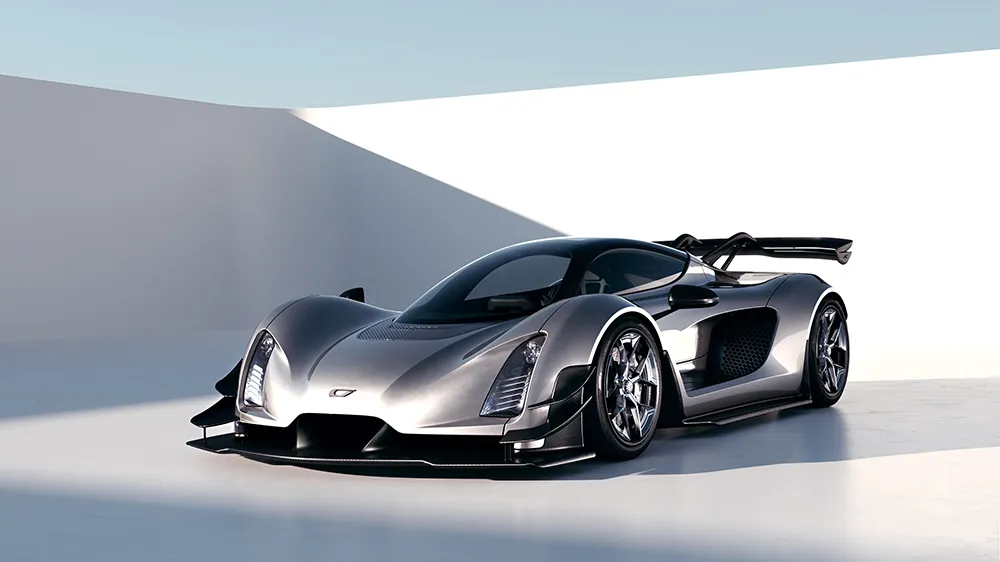
Czinger 21C: The AI-Designed Hypercar Built in Los Angeles
The Czinger 21C is more than a hypercar. Designed and manufactured in Los Angeles using artificial intelligence, additive manufacturing, and robotics, it represents a radical shift in how vehicles—and potentially entire industries—can be engineered and produced.
A Hypercar Born in Los Angeles
Southern California has long been a center of technological experimentation. Aerospace, entertainment, and advanced manufacturing have all flourished in the region. In recent years, Los Angeles has also become a proving ground for the future of artificial intelligence driven engineering.
The Czinger 21C is one of the most striking examples of this shift. Designed, manufactured, and assembled in Los Angeles, the vehicle represents a new generation of hypercars built using artificial intelligence, advanced materials, and additive manufacturing technologies. Rather than following traditional automotive production methods, Czinger vehicles are engineered through a digital design and manufacturing platform that combines AI software, robotics, and 3D printing.
The result is a machine that pushes the limits of both performance and industrial design. The 21C is not merely a fast car. It is a demonstration of how artificial intelligence can transform the way complex physical products are conceived and manufactured.
The Vision Behind Czinger
Czinger Vehicles was founded by Kevin Czinger and his son Lukas Czinger, with headquarters in Los Angeles, California. The company is closely tied to Divergent Technologies, an advanced manufacturing firm that develops AI driven engineering tools and additive production systems.
The goal was not simply to build another hypercar brand. Instead, the founders envisioned a complete reinvention of manufacturing. Traditional automotive production relies on enormous factories, fixed tooling, and rigid assembly lines. These systems require billions of dollars in capital and are difficult to adapt once production begins.
Czinger approached the problem from a different direction. By combining generative design algorithms with metal 3D printing and robotic assembly, the company created a manufacturing system capable of building complex structures without the constraints of conventional tooling. This system is known as the Divergent Adaptive Production System.
The Czinger 21C serves as the flagship demonstration of this platform. It is effectively a proof of concept for a new industrial paradigm in which software driven design and digital production replace traditional manufacturing infrastructure.
Artificial Intelligence in Vehicle Design
One of the defining aspects of the 21C is the role artificial intelligence plays in the engineering process. Instead of relying solely on human designers to determine the structure of components, Czinger engineers use generative design software that collaborates with AI algorithms.
Engineers define parameters such as structural strength, weight limits, and performance requirements. The AI system then explores thousands of possible configurations to determine the most efficient geometry for each component. The resulting designs often resemble organic skeletal structures optimized for maximum strength with minimal material.
These shapes would be nearly impossible to manufacture using traditional methods. However, additive manufacturing makes them feasible. Metal parts can be printed layer by layer using powdered alloys and laser sintering techniques, allowing the AI generated structures to be produced exactly as designed.
This process results in components that are lighter, stronger, and more efficient than those produced through conventional machining or casting methods.
Additive Manufacturing at Scale
The Czinger 21C is widely regarded as one of the first production vehicles to rely heavily on metal additive manufacturing. Hundreds of components of the car are produced using advanced 3D printing technologies, including structural elements, suspension components, and complex brackets.
Unlike prototyping processes where 3D printing is used only during early design stages, the Czinger approach integrates additive manufacturing directly into production. Parts are printed with high precision metal powders and then assembled by robotic systems that bond components together with structural adhesives.
This approach eliminates the need for large stamping tools or casting molds. Instead of designing parts to suit manufacturing limitations, engineers can design purely for performance and efficiency.
Another advantage is sustainability. Because additive manufacturing builds components layer by layer, it produces far less material waste compared to traditional subtractive manufacturing processes.
A Radical Hypercar Architecture
The engineering philosophy behind the 21C extends beyond manufacturing methods. The vehicle itself is designed around a unique architecture that prioritizes performance and aerodynamics.
The cockpit features a tandem seating arrangement similar to a fighter jet. The driver sits centrally at the front, while the passenger sits directly behind. This configuration reduces the width of the cockpit and improves aerodynamic efficiency.
The chassis combines carbon fiber with AI optimized metal structures printed using advanced additive manufacturing techniques. The result is an extremely rigid yet lightweight structure capable of supporting extreme performance levels on both road and track.
Only a limited number of Czinger 21C vehicles will be produced, making it one of the most exclusive hypercars in the world.
Extreme Performance
While the manufacturing technology behind the 21C is groundbreaking, the car’s performance figures are equally remarkable. The vehicle uses a hybrid powertrain combining a twin turbocharged V8 engine with high performance electric motors.
The internal combustion engine is paired with electric motors that drive the front wheels, creating an advanced hybrid drivetrain with torque vectoring capabilities. Together, these systems produce approximately 1,250 horsepower.
The performance numbers place the 21C among the fastest road legal cars ever built. The hypercar can accelerate from zero to sixty miles per hour in roughly two seconds and reach top speeds exceeding 250 miles per hour.
These capabilities demonstrate that AI assisted design and additive manufacturing are not just theoretical technologies. They can produce machines capable of competing at the highest levels of automotive performance.
Reinventing the Factory
The most significant impact of the Czinger project may lie beyond the automotive industry itself. The Divergent Adaptive Production System represents a new model for manufacturing.
Traditional vehicle factories rely on long assembly lines and dedicated tooling for each model. Changing a design often requires retooling entire production systems, which is costly and time consuming.
In contrast, the Divergent system relies on digital design files, additive manufacturing equipment, and robotic assembly cells. Because the system is software driven, it can adapt to different products without massive physical reconfiguration.
This means the same facility could potentially produce entirely different products simply by updating digital design instructions.
Beyond Hypercars
Although the Czinger 21C is a luxury hypercar, the technology behind it is intended to scale far beyond niche vehicles.
Divergent Technologies has already partnered with major automotive and aerospace companies to apply its manufacturing platform to a wider range of products. The same principles used to create the 21C could eventually be applied to aircraft structures, electric vehicles, and advanced mobility systems.
The implications are significant. If digital manufacturing systems replace traditional assembly lines, production could become far more flexible and localized. Factories might shift from massive centralized facilities to smaller software driven production hubs.
AI and the Future of Manufacturing
The Czinger 21C demonstrates how artificial intelligence can move beyond software applications and influence the physical world. By combining generative design, additive manufacturing, and robotics, engineers can create structures that were previously impossible to build.
In many ways, the car represents the intersection of several technological revolutions: artificial intelligence, advanced materials science, and digital manufacturing.
For companies exploring the future of enterprise AI and automation, the lessons extend beyond automotive design. The same principles used to optimize hypercar components can also optimize industrial systems, supply chains, and production workflows.
A Glimpse of the AI Industrial Era
The Czinger 21C is an extraordinary machine, but it is also a symbol of a broader transformation underway in manufacturing and engineering.
Artificial intelligence is no longer confined to software platforms or digital services. It is beginning to shape how physical products are designed, built, and delivered.
From AI optimized structures to robotic assembly systems, the technologies demonstrated by Czinger suggest a future where manufacturing becomes far more adaptable, efficient, and intelligent.
And fittingly, one of the most ambitious examples of that future is being built in Los Angeles.